
MFR 2028–2034: Different Positions on the EU’s Next Long-Term Budget
19.10.2026 11:06
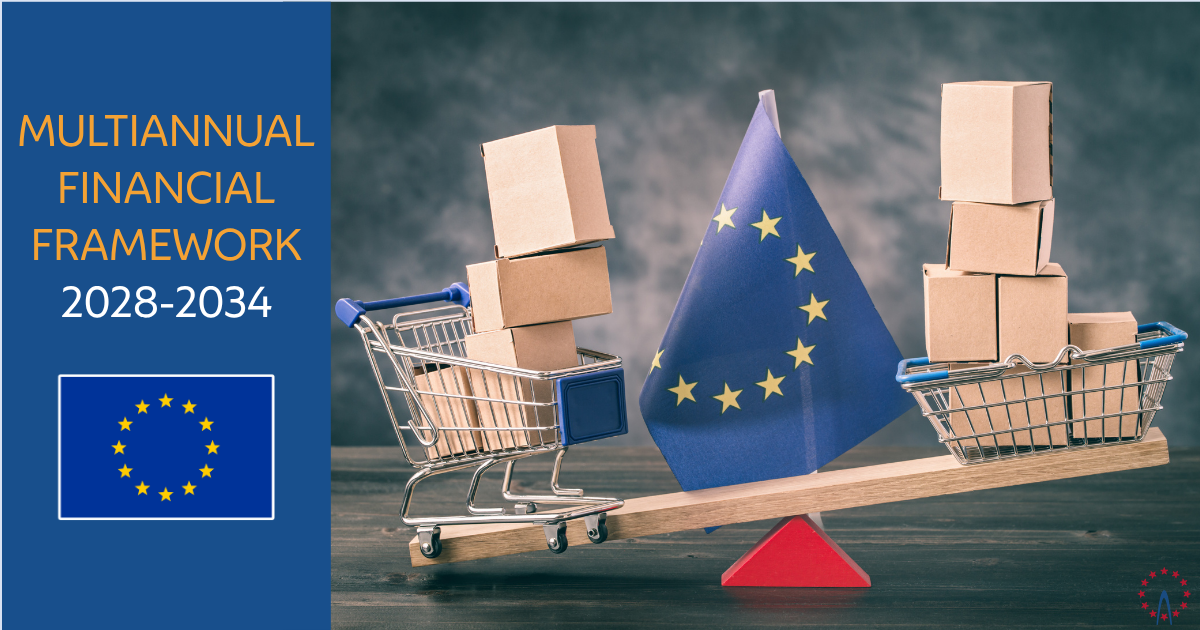
Following three months of in-depth discussions on the 2028–2034 Multiannual Financial Framework (MFF), EU Member States continue to hold different positions on the next long-term budget. Ahead of the EU leaders’ summit on 15–16 October, the Irish Presidency presented a revised ‘negotiating box’, setting out the framework for the remaining negotiations.
The proposal reduces the overall budget compared to the European Commission's 2025 draft, cutting around €141 billion from planned spending. The debate highlights several interrelated questions: how large the EU budget should be, how funding should be distributed between established and emerging priorities, and how Member States can reconcile their interests to reach an agreement. The following perspectives illustrate the main arguments in this debate, from national budgetary concerns to broader questions about the EU's strategic direction and the political negotiations themselves.
1. Supporters of Fiscal Restraint ("Frugal" Countries)
The so-called 'frugal' countries — Germany, Austria, the Netherlands, Finland, Denmark, and Sweden — argue that the EU should avoid significantly expanding its budget. They are concerned about rising financial commitments and believe that national governments should retain primary responsibility for many areas of spending. From this perspective, the Irish proposal is attractive because it reduces the overall budget compared to the European Commission's proposal.
Key argument: A smaller budget promotes fiscal discipline and limits the burden on net contributor countries.
2. Supporters of Traditional EU Spending
The group known as the 'Friends of Cohesion', which includes countries such as Italy and Spain, places great importance on preserving agricultural subsidies and cohesion funding for less developed regions. They view such expenditure as vital for economic convergence, rural development, and social stability. They are therefore concerned about changes that could weaken established funding instruments or reduce the resources available to their regions and agricultural sectors.
Key argument: Cohesion and agricultural spending are essential for reducing regional inequalities and maintaining political support for European integration.
3. Advocates of Strategic European Investment
Think tanks and other policy experts have criticised the proposal for insufficiently addressing Europe's shared challenges, including competitiveness, defence, innovation, the transition to a low-carbon economy and energy security. They argue that the EU budget is already small in relation to Member State spending and should be increased, not decreased. In their view, reducing investment in forward-looking priorities while maintaining traditional spending patterns risks limiting the EU's capacity to respond to future challenges.
Key argument: Europe's long-term competitiveness and strategic autonomy require greater investment in EU-wide public goods, rather than maintaining current spending patterns.
4. Political Negotiators' Perspective
For the President of the European Council and national leaders, the central challenge is to find a compromise that all Member States can accept. Negotiations must reconcile competing budgetary interests and policy priorities while taking account of domestic political constraints and the timetable for adopting the next MFF. Governments including France and Italy have resisted pressure to conclude negotiations by the end of 2026, arguing that the quality of the agreement matters more than meeting a deadline.
Key argument: A durable agreement is more important than meeting an artificial negotiating deadline.
In sum, the revised negotiating box can be seen as a pragmatic attempt to reconcile these deeply divided national interests. Supporters of the Irish proposal regard it as a realistic compromise that acknowledges budget constraints while protecting politically sensitive spending. Meanwhile, critics argue that it misses a rare opportunity to modernise the EU budget and increase investment in Europe's future competitiveness and security. Therefore, the central tension is not just about how much money should be spent, but also about whether the EU's long-term budget should continue to prioritise agriculture and regional support, or shift more decisively towards innovation, defence, climate policy, and other common European priorities.
